How Organizations Procure Control Room Console Furniture for 24/7 Operations
Jump to a Section
TL;DR – Quick Summary
For procurement teams and facilities planners evaluating console furniture for 24/7 control room environments:
Procuring console furniture for a 24/7 control room requires more than selecting workstations. Organizations must evaluate operational requirements, stakeholder needs, system integration, durability for continuous use, and long-term scalability. Successful procurement strategies treat console furniture as part of the control room’s critical infrastructure rather than a one-time furniture purchase.
Procuring console furniture for a 24/7 control room environment is not a standard furniture purchase—it is a long-term operational investment. Whether the control room supports utilities, transportation, public safety, security, or enterprise operations, the procurement process must account for continuous use, operator performance, system integration, and lifecycle cost.
Organizations that approach console furniture procurement with the same rigor applied to mission-critical systems tend to achieve better outcomes, fewer retrofits, and longer service life.
This article outlines how organizations typically evaluate, specify, and procure console furniture for 24/7 operations—and what decision-makers should consider before committing to a solution.
Understanding the Role of Console Furniture in 24/7 Control Rooms
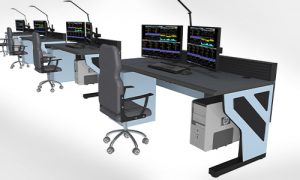
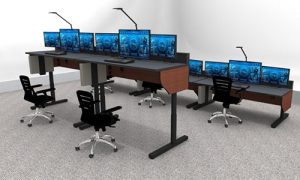
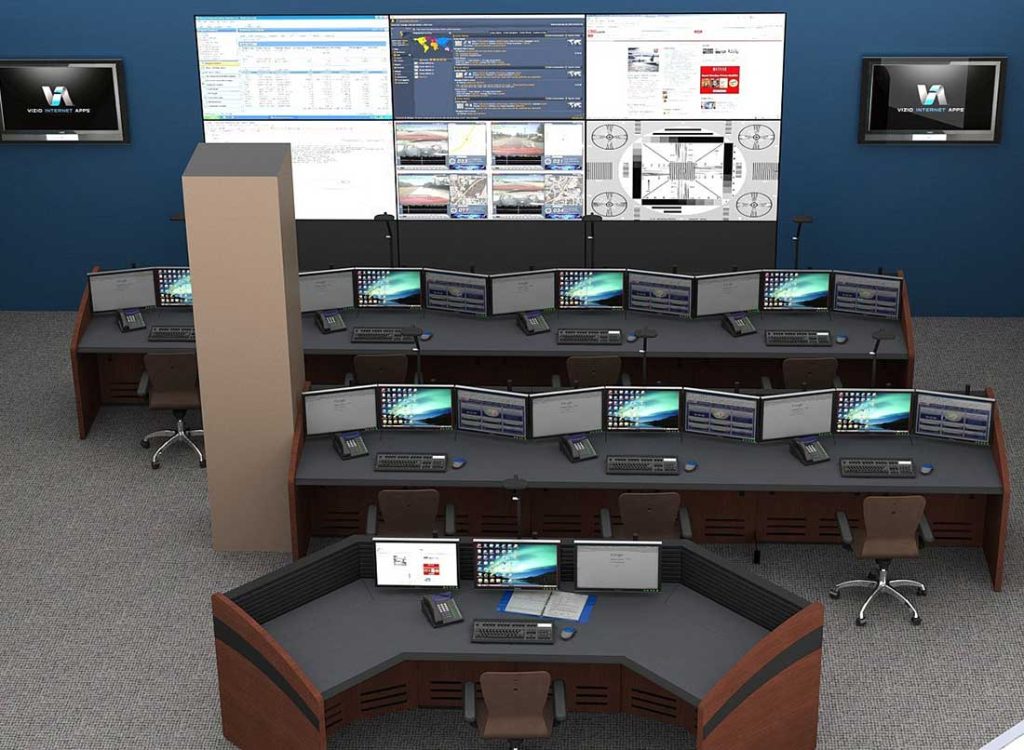
Console furniture forms the physical foundation of the control room environment. It supports operators, technology, and workflows that must function reliably around the clock.
In 24/7 settings, consoles are not simply desks—they are integrated workstations designed to accommodate:
- Continuous staffing across multiple shifts
- High display density and equipment loads
- Ergonomic requirements for prolonged use
- Cable management, power distribution, and thermal considerations
Because console furniture directly impacts operator comfort, alertness, and efficiency, procurement teams often treat it as part of the overall control room infrastructure rather than a standalone furnishing.
Key Stakeholders in the Procurement Process
Control room console procurement typically involves multiple stakeholders, each with different priorities. Successful projects align these perspectives early in the process.
Common stakeholders include:
- Operations leadership, focused on workflow efficiency and uptime
- Facilities or capital planning teams, responsible for budgeting and installation logistics
- IT and engineering teams, concerned with system integration and equipment compatibility
- Health, safety, and ergonomics representatives, ensuring compliance and operator well-being
- Procurement teams, managing vendor evaluation and contractual requirements
Understanding how console furniture decisions affect each group helps organizations develop specifications that balance operational needs with procurement realities.
Defining Operational Requirements Before Vendor Selection
One of the most common procurement challenges is engaging vendors before operational requirements are clearly defined.
Organizations that achieve better outcomes typically document:
- Number of operators per shift
- Shift duration and rotation patterns
- Equipment and display requirements per position
- Anticipated future expansion or reconfiguration
- Environmental factors such as lighting, acoustics, and cooling
For organizations planning or upgrading complete control room furniture systems, these requirements often inform not only console selection but also the overall room layout and infrastructure strategy.
Evaluating Console Furniture for Continuous Use
Not all console furniture is designed for continuous operation. In procurement reviews, durability and long-term performance should carry as much weight as initial cost.
Key evaluation criteria often include:
- Structural materials and load ratings
- Surface durability under constant contact
- Adjustability for operators of different sizes
- Ease of maintenance and component replacement
- Proven performance in comparable 24/7 environments
Lifecycle cost analysis—rather than upfront pricing alone—frequently becomes a deciding factor in vendor selection.
Integration With Technology and Control Room Systems
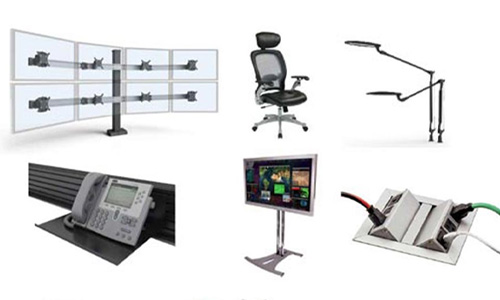
Console furniture must integrate seamlessly with the control room’s technology stack. Procurement teams often work closely with engineers to ensure compatibility with:
- Monitor walls and display systems
- Computing hardware and peripherals
- Cable routing and power infrastructure
- Cooling and ventilation strategies
Poor integration planning can lead to costly modifications after installation, making this phase critical during vendor evaluation.
Procurement Pathways: Public vs. Private Sector Considerations
Procurement pathways vary depending on whether the organization operates in the public or private sector.
Public-sector organizations may rely on pre-approved purchasing vehicles and compliance-driven specifications. In many cases, GSA contracts for control room procurement help streamline purchasing while ensuring adherence to federal requirements.
Private-sector organizations often emphasize:
- Customization and scalability
- Lead times and deployment flexibility
- Long-term vendor partnership
In both cases, procurement teams benefit from working with console furniture providers that understand regulatory environments and mission-critical operational demands.
Balancing Customization and Standardization
A common procurement decision involves balancing custom console configurations with standardized components.
Highly customized consoles can optimize workflows but may increase lead times and costs. Standardized modular systems, on the other hand, often provide flexibility while simplifying future expansion or reconfiguration.
Many organizations adopt a hybrid approach—standardizing core console elements while customizing specific features to meet operational needs.
Planning for Growth and Future Upgrades
Forward-looking procurement strategies account for changes that may occur years after installation.
These may include:
- Increased staffing levels
- New monitoring technologies
- Evolving operational requirements
- Facility renovations or relocations
Selecting console furniture systems designed for modular expansion helps protect the investment over time and reduces the need for full replacement.
From Procurement to Implementation
The procurement process does not end with vendor selection. Implementation planning is equally important.
Successful projects often include:
- Detailed installation coordination
- Phased deployment to minimize downtime
- Operator training and transition support
- Post-installation evaluation and adjustment
Organizations that treat console furniture procurement as a lifecycle partnership—rather than a one-time purchase—tend to achieve better long-term performance and operator satisfaction.
Final Thoughts
Procuring console furniture for 24/7 operations requires more than comparing product specifications. It demands an understanding of operational workflows, human factors, technology integration, and long-term sustainability.
When procurement teams align these considerations early, they are better positioned to select console furniture solutions that support continuous performance, reduce operational risk, and deliver lasting value within mission-critical control room environments.
Further Reading: Console Furniture Selection for Control Rooms
Selecting console furniture for a 24/7 control room involves more than just procurement considerations. For a deeper look at console design, ergonomics, materials, and configuration options, our comprehensive console furniture buyer’s guide breaks down what decision-makers should evaluate when planning or upgrading mission-critical control room environments.
Contact Command Watch
800-346-7521
cwsales@command-watch.com