Console Furniture for Transportation Operations Centers
Jump to a Section
TL;DR – Quick Summary
For planners and operations teams designing transportation control rooms:
Transportation operations centers rely on console furniture that can support continuous monitoring, multiple display systems, and long operator shifts. In environments such as traffic management centers and airport operations rooms, consoles must provide durability, ergonomic flexibility, and seamless integration with monitoring technology. Well-designed console workstations help operators maintain situational awareness while supporting the evolving infrastructure of modern transportation networks.
Transportation operations centers serve as the command hubs for complex systems that must operate continuously and reliably. From highway traffic management centers to airport operations rooms and rail network control facilities, these environments rely on operators who monitor large volumes of data in real time and respond quickly to changing conditions.
In these mission-critical settings, console furniture plays a central role in supporting both technology and the people who monitor it. Well-designed consoles help maintain situational awareness, support long operator shifts, and ensure that monitoring equipment can be integrated into the control room environment reliably and in an organized way.
Why Transportation Operations Centers Depend on Console Workstations
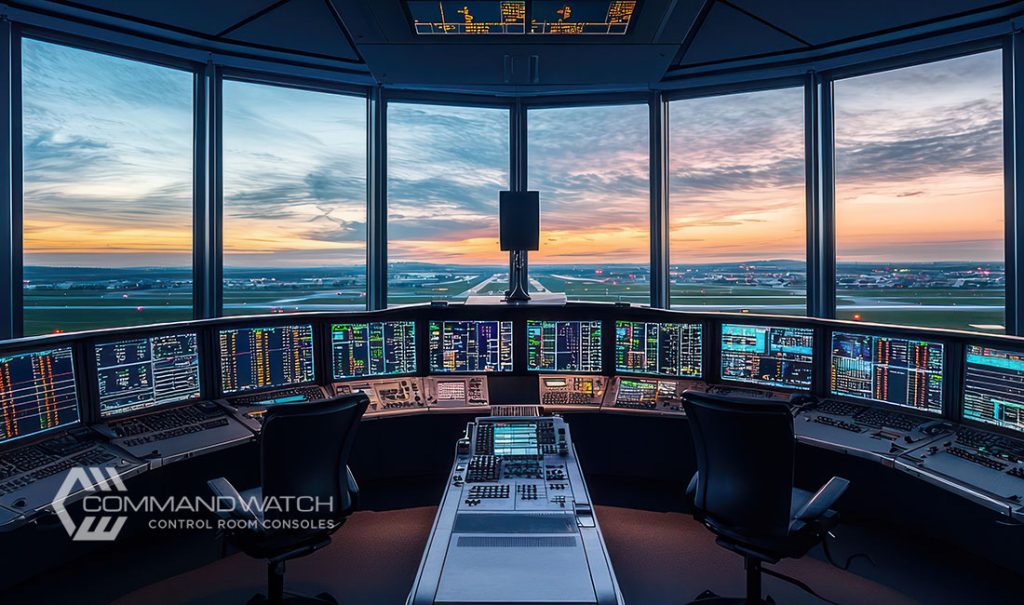
Transportation infrastructure requires constant monitoring and coordination. Traffic management centers track roadway conditions, congestion patterns, and incident response. Many organizations rely on specialized transportation and airport control room console solutions designed for these complex monitoring environments. Airport operations centers oversee airfield activity, passenger flows, security coordination, and system alerts. Rail and transit networks rely on centralized control rooms to manage schedules and maintain safety across complex transportation systems.
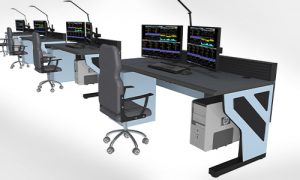
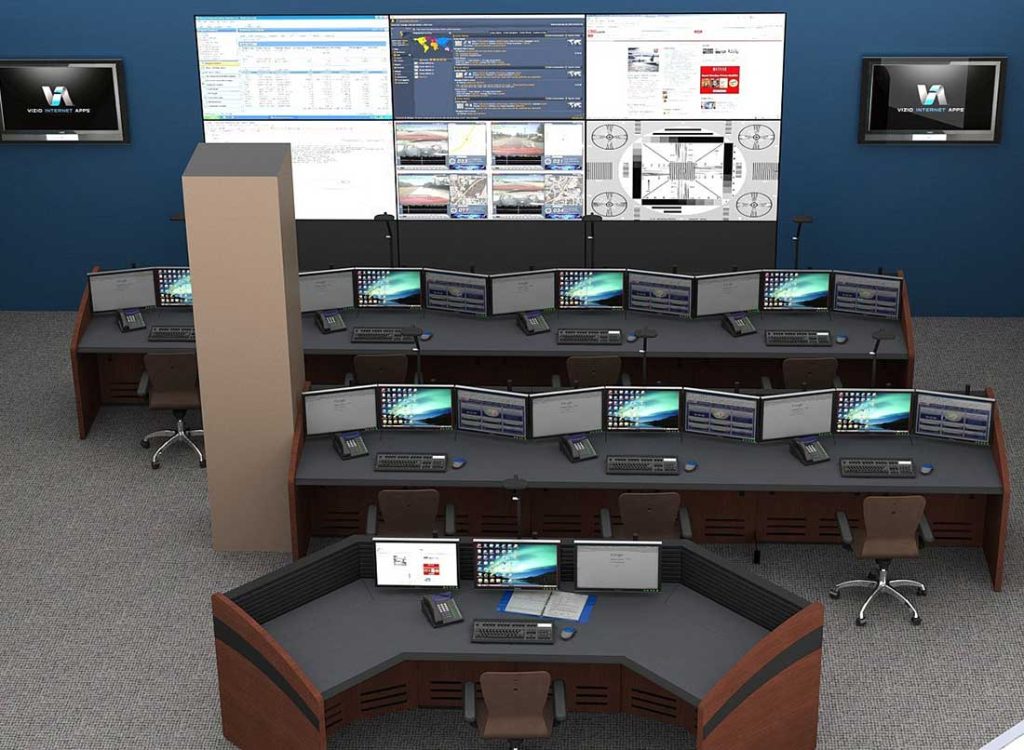
Operators in these facilities must simultaneously observe multiple systems, often across several large displays or video walls. Console furniture provides the structured workspace that supports this level of monitoring by organizing displays, computing hardware, and communication tools into a cohesive operator station.
Unlike standard office desks, control room consoles are designed to accommodate equipment density, cable management, and the physical demands of continuous-monitoring environments.
Operational Challenges in Traffic and Aviation Control Rooms
Transportation control rooms present several unique operational challenges that influence how consoles are designed and deployed.
First, operators typically work extended shifts, sometimes around the clock. Console furniture must support ergonomic seating and sit-stand work, keeping staff comfortable and alert over long periods.
Second, transportation operations centers often involve high display density. Traffic camera feeds, system dashboards, sensor data, and communication tools may all be visible simultaneously. Consoles must support multiple monitors without obstructing sightlines to shared video walls or large display systems.
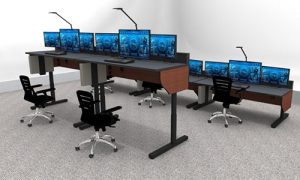
Third, control rooms must accommodate multiple operators working in close proximity. Console layouts need to allow collaboration while maintaining individual workspace boundaries and ensuring clear visibility across the room.
Finally, transportation environments frequently require rapid response coordination. Operators must be able to communicate easily with other teams, emergency responders, and field personnel while maintaining awareness of the systems they oversee.
Console Furniture Requirements for 24/7 Transportation Monitoring
Because transportation operations never fully stop, console furniture must be designed for durability and reliability under continuous use. Traffic management centers, airport operations rooms, and transit control facilities all rely on workstations that support operators throughout multiple shifts each day. As a result, console systems must be engineered to handle both the physical demands of equipment and the long-term needs of the operators who depend on them.
Structural durability is one of the most important considerations. Consoles in transportation environments often support multiple monitors, computing systems, communications equipment, and other monitoring tools. Over time, these systems place a significant load on the workstation structure. Console furniture must therefore be built with strong materials and stable support systems that can maintain performance under constant use without flexing, shifting, or degrading.
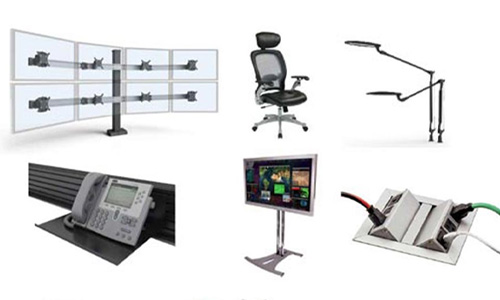
Ergonomic adjustability is equally important in control rooms that operate around the clock. Different operators may use the same workstation across multiple shifts, and each individual may require different seating positions or monitor heights to remain comfortable and focused. Adjustable work surfaces and monitor mounting systems allow operators to configure the workstation to suit their needs, helping reduce fatigue and supporting better concentration during long monitoring sessions.
Another critical factor is efficient cable management. Transportation control rooms rely on complex technology infrastructures, including monitoring systems, communications hardware, and network equipment. Without proper cable routing and organization, these systems can quickly become difficult to maintain or upgrade. Console furniture designed with integrated cable pathways and management systems helps keep equipment organized while simplifying maintenance and troubleshooting.
Console workstations must also support integration with monitoring equipment. Transportation operations centers often rely on multi-monitor setups to display traffic data, system alerts, mapping tools, and camera feeds simultaneously. Consoles should accommodate flexible monitor configurations while maintaining clear sightlines to shared displays or video walls used throughout the control room.
Finally, flexible configurations allow control rooms to evolve as transportation systems grow and monitoring technologies change. Modular console systems make it easier to add new operator positions, reconfigure workstations, or integrate new equipment without requiring a complete redesign of the room. This adaptability is especially valuable in transportation facilities where operational needs can change over time.
Together, these considerations help ensure that console furniture remains reliable, adaptable, and capable of supporting the complex monitoring environments found in modern transportation operations centers.
Integrating Consoles With Video Walls and Monitoring Systems
Transportation operations centers frequently rely on large video walls or shared display systems to provide a unified view of regional activity. These video walls may display traffic camera feeds, airfield monitoring systems, weather data, or system alerts.
Console furniture must be designed to work in coordination with these display systems. Sightlines from operator workstations to the video wall are critical, ensuring that staff can quickly reference shared displays without losing focus on their individual monitoring stations.
At the same time, operator consoles often support multiple local displays that provide detailed data views. A well-designed console layout allows operators to maintain awareness of both local and shared displays simultaneously.
Careful planning of console height, monitor mounting systems, and workstation spacing helps maintain visibility across the control room while keeping technology accessible.
Planning Console Layouts for Transportation Operations Centers
Console layout planning begins with understanding the operational workflow of the control room. Each operator station may be responsible for different monitoring functions, such as traffic management, communications, or system diagnostics.
Control room designers typically consider several factors when planning console placement:
- Operator roles and responsibilities
- Sightlines to shared displays
- Communication paths between team members
- Room acoustics and environmental factors
- Future expansion requirements
Because transportation systems continue to evolve, control room environments must remain adaptable. Console systems that support modular expansion allow facilities to add workstations or integrate new monitoring technologies without rebuilding the entire room.
Proper layout planning ensures that the console environment supports both current operations and future growth.
Supporting Continuous Operations in Transportation Control Rooms
Transportation operations centers function as the nerve centers for critical infrastructure. The operators working in these facilities depend on environments that allow them to maintain awareness, respond quickly to incidents, and coordinate across multiple systems.
Console furniture helps provide the structured workspace necessary for these demanding environments. By supporting technology integration, ergonomic comfort, and clear visibility across monitoring systems, console workstations contribute directly to the effectiveness of transportation control rooms.
As transportation networks continue to grow in complexity, the design of control room environments—including the consoles that support them—will remain an important factor in maintaining safe and reliable operations.
Further Reading: Console Furniture Selection for Control Rooms
Organizations planning or upgrading control room environments often benefit from reviewing broader design considerations before selecting console systems. Our console furniture buyer’s guide explains key factors to evaluate when designing monitoring environments for 24/7 operations.
Contact Command Watch
800-346-7521
cwsales@command-watch.com